Scottish Ancestry Course
Starting Your Scottish Ancestry Journey: Foundations for Family History
The best starting point for Americans researching Scottish Ancestry.
Scottish Ancestry research for American families often begins with a clue this side of the Atlantic, but it cannot be solved by online hints alone. Common family tree building sites can point you toward possibilities, while Scottish research requires a different approach: understanding Scotland's record systems, parishes, naming patterns, places, and evidence standards. IHGS has been teaching genealogy since 1961, giving students a practical route into British Isles records, Scottish methodology, and accurate pedigrees.

Online IHGS Course
Find the Scottish records that can move your family tree forward.
Build confidence with Scotland's major record sets and learn how IHGS experts connect evidence into a reliable pedigree.
Built for American researchers
Ideal when your U.S. family tree points back to Scotland and you need to move beyond hints into real Scottish records.
45 activities
Work through a structured sequence of learning activities focused on records, methods, and research habits.
One year of access
Enrollment includes access for 1 year, giving you time to revisit lessons while working on your own Scottish lines.

The Course
A clear starting point for Scottish Ancestry research.
Starting Your Scottish Ancestry Journey: Foundations for Family History is an introductory course designed to give family historians, especially Americans with Scottish roots, a practical grounding in Scotland's key records and research methods.
You'll learn how to approach Scottish records with purpose, understand what each source can and cannot tell you, and bring your findings together in accurate pedigrees, supported by IHGS expertise in British Isles family history.
Why Scottish Ancestry Needs Method
Scottish records are rich, but they reward careful searching.
Many family historians reach Scotland through a name, a place, a migration story, or a clue in a census return. The next step is learning which records to search, how Scottish sources fit together, and how to avoid following the wrong family simply because a name looks familiar.
This course focuses on building strong research habits: comparing evidence, tracking places, understanding record coverage, and recognising common pitfalls before they become permanent mistakes in your family tree. That method-led approach is why IHGS is trusted by students who want more than hints, guesses, and copied trees.
For Americans with Scottish Roots
Turn a transatlantic family clue into evidence-led Scottish Ancestry research.
Many Americans know they have Scottish ancestry through a surname, family story, immigration clue, DNA match, or an ancestor listed as Scottish in a U.S. record. The hard part is proving the connection back in Scotland, where places, parishes, registration districts, naming patterns, and record coverage all matter.
This course gives you the foundation to cross that gap more confidently. Instead of relying on copied trees or vague online matches, you learn how Scottish records work, how to compare evidence, and how to build a pedigree that links your American family history to Scottish sources with care.
DNA and Scottish Ancestry
A DNA test may not label Scotland, even when the paper trail points there.
Ethnicity estimates are useful clues, but they are not proof of where a specific ancestor lived. One test may label a region as Scottish, while another may group similar DNA under broader British Isles, Irish, English, or Northern European categories. Reference panels, company algorithms, regional overlap, and the random way DNA is inherited can all affect what appears in your results.
That is why Scottish Ancestry research works best when DNA evidence is interpreted alongside records, places, family relationships, and migration clues. If you need help making sense of DNA matches or connecting test results to documented Scottish lines, IHGS also offers family research and DNA services.
IHGS Expertise
British Isles family history is what IHGS does best.
Since 1961, the Institute of Heraldic and Genealogical Studies has helped family historians build serious research skills across England, Scotland, Wales, Ireland, and the wider British Isles. For American researchers, that expertise matters because British Isles genealogy is rarely just a name search; it crosses counties, jurisdictions, record systems, naming patterns, migrations, and historical boundaries.
For Scottish Ancestry, the right guidance can save years of circling the same names. IHGS teaches students to work from original records, understand local context, weigh conflicting evidence, and build pedigrees that can stand up to scrutiny. That is why IHGS is such a strong choice for anyone in the United States who wants British Isles genealogy taught properly.
What You'll Learn
The essential records and skills for starting Scottish Ancestry research.
The course introduces the sources and habits that help turn scattered Scottish clues into a structured family history.
Statutory registers
Learn how civil birth, marriage, and death records can anchor your Scottish research and point toward earlier generations.
Parish registers
Understand how church records can help before civil registration and why coverage, spelling, and local context matter.
Census returns
Use census evidence to place families in time, connect households, and test whether a possible ancestor really fits.
Valuation rolls
Explore how valuation rolls can add addresses, occupations, property context, and continuity between census years.
Accurate pedigrees
Bring your findings together in a clear family structure that records evidence rather than assumptions.
ScotlandsPeople searches
A ScotlandsPeople subscription is strongly recommended so you can follow along with hands-on searches.
Hands-On Research

ScotlandsPeople is the official Scottish Government site for searching government records and archives.
Make the most of ScotlandsPeople while you study.
It is run by National Records of Scotland, a non-ministerial department of the Scottish Government.
ScotlandsPeople is central to many Scottish family history searches. Having access while you work through the course lets you practise with real searches, follow examples more closely, and connect the lessons to your own research questions.
The goal is not just to find a record, but to understand why that record matters, what it proves, what it leaves unanswered, and where it should lead you next.
Who It's For
A practical course for family historians beginning Scottish Ancestry research.
This course is ideal if you are an American family historian with Scottish Ancestry in your family tree, have reached Scotland through migration records, or want a stronger foundation before tackling more advanced Scottish sources.
New Scottish researchers
Start with the core record sets and learn how to approach them in a logical order.
Family historians with clues
Turn names, dates, places, and family stories into record-led research questions.
Researchers rebuilding a line
Check inherited trees or old conclusions against evidence from Scottish records.
Course Access
Full access to 45 learning activities for one year.
Work steadily through the course, revisit lessons as your family tree develops, and use the activities to strengthen your own Scottish Ancestry research.
Recorded Talk
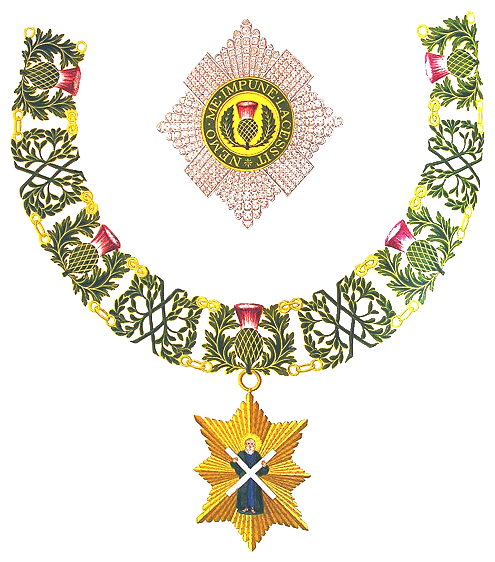
The Order of the Thistle has medieval origins, while the present-day order was largely created in 1687 by King James VI of Scotland, who was also King James I of England. The Thistle Chapel, designed by Robert Lorimer and completed in 1911, contains stalls for the 16 knights, the Sovereign's stall, and two Royal stalls, creating a rich display of heraldry celebrating Scotland.
Enroll
Start your Scottish Ancestry journey with IHGS.
Build a practical foundation in Scottish family history research and learn how to use key records with more confidence, guided by IHGS expertise in British Isles genealogy for American and international students.
Selecting Enroll Now will take you to Calibrae, our teaching and course platform, to complete your enrollment. Course fee: $608 (£450). Enrollment includes 45 learning activities and access for 1 year.
FAQ
Frequently asked questions about the Scottish Ancestry course.
Is this course suitable for Americans researching Scottish Ancestry?
Yes. It is especially useful for American family historians whose research has reached Scotland and who need a clear foundation in Scottish records, places, and research methods.
What records does the course cover?
The course focuses on statutory registers, parish registers, census returns, valuation rolls, and constructing accurate pedigrees from your findings.
Do I need ScotlandsPeople?
A subscription to ScotlandsPeople is strongly recommended so you can follow along with hands-on searches and make the most of the course.
How long will I have access?
The Calibrae enrollment plan lists access for 1 year and includes 45 learning activities.
Why does Scottish Ancestry research need a different approach from common family tree sites?
Family tree sites can be useful for clues, but Scottish Ancestry research depends on understanding Scotland's own records, parishes, naming patterns, local geography, and evidence standards. This course helps you test hints against original Scottish sources instead of simply accepting a suggested match.
What is the biggest misconception about Scottish Ancestry?
One common misconception is that a Scottish surname automatically proves a clan connection or identifies the right family. Surnames matter, but they have to be tested with records, places, dates, relationships, and a clear chain of evidence.
What mistakes do beginners often make with Scottish records?
Beginners often attach the first person with the right name, overlook parish boundaries, ignore spelling variations, miss women under married and maiden names, or copy unsourced online trees. Scottish records are rich, but they need careful comparison before conclusions are added to a pedigree.
Why doesn't my DNA test show Scotland if I have Scottish Ancestry?
DNA ethnicity estimates vary between testing companies and can group Scottish ancestry with wider British Isles, Irish, English, or Northern European regions. A missing Scotland label does not automatically disprove Scottish ancestry, and a Scotland label does not prove a specific ancestor. The strongest work combines DNA clues with documentary evidence.