American Titanic Passengers: Statistics, Survivors & Family History
American Titanic passengers remain central to the story of one of history’s most studied passenger ships, and its passenger lists continue to provide valuable information for genealogists and family historians. Among the 1,317 passengers aboard Titanic were 307 Americans, representing 34 states and Washington, DC. Their stories offer a fascinating snapshot of immigration, travel, wealth, and family connections in the early twentieth century.
Most American passengers were found in First Class, typically wealthy individuals traveling for leisure. In Second Class, Americans made up 16% of passengers, while in Third Class—largely composed of immigrants—only 10% were U.S. citizens, often accompanying relatives back to America.
“American passengers represented 34 states, along with Washington, DC. Notably, around one-third came from a single state: New York, largely reflecting the concentration of First Class travelers. Pennsylvania had the next highest representation.”
Where Did American Titanic Passengers Come From?
American Titanic passengers represented 34 states, along with Washington, DC. Notably, around one-third came from a single state: New York, largely reflecting the concentration of First Class travelers. Pennsylvania had the next highest representation.
For wider immigration context, the U.S. National Archives provides a useful guide to passenger arrival records, which can support research into a family’s journey to America.
Which American Passengers Survived the Titanic Disaster?
For American Titanic passengers, survival depended heavily on class, gender, and access to the limited lifeboats available on the night of the disaster.
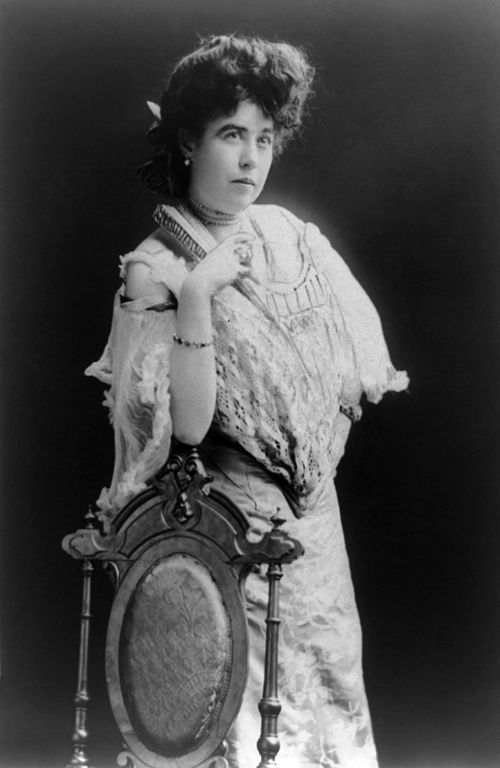
American Titanic Passengers: The “Unsinkable” Molly Brown
It was only after her death that Margaret Brown became widely known as “The Unsinkable Molly Brown.”
A wealthy widow from Denver with humble beginnings, she dedicated much of her life to helping the poor and advocating for women’s suffrage. After surviving the disaster, she chaired the Titanic Survivors’ Committee and even ran for the U.S. Senate in 1914.
Her legacy later inspired one of the most memorable characters in the Hollywood retelling of the Titanic story.
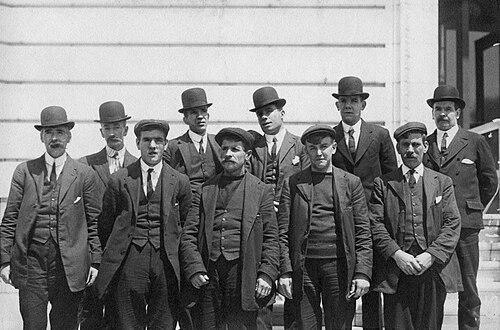
The Crew & Their Sacrifice
The largest group aboard Titanic was its crew—around 900, mostly British—of whom only 212 survived.
Few were American, but among them were three postal clerks:
- John S. Marsh
- William L. Gwynn
- Oscar S. Woody
All three lost their lives while attempting to save the ship’s mail. As the mail room flooded, they worked tirelessly to move approximately 200 bags containing over 400,000 letters to the upper decks.
Their dedication underscores why the ship bore the title RMS—Royal Mail Ship—and stands as a powerful example of duty in the face of disaster.
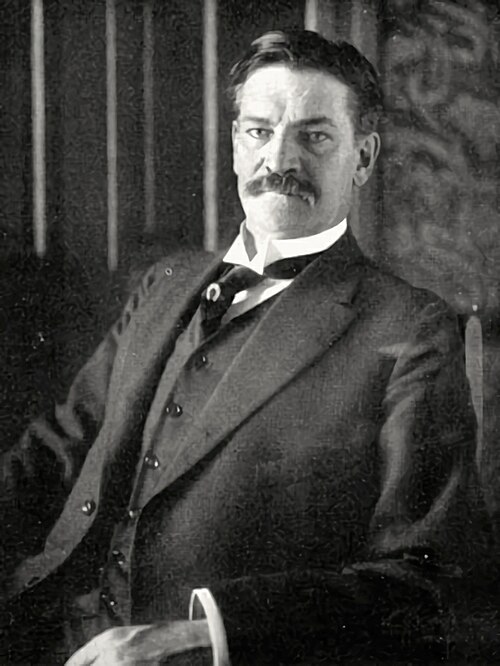
A Survivor’s Account: Archibald Gracie
One of the most compelling firsthand accounts comes from Col. Archibald Gracie of Washington, DC. In his book The Truth About the Titanic, he recounts the moment the iceberg struck and his extraordinary survival.
Gracie was thrown into the freezing water as the ship sank but managed to climb onto an overturned lifeboat, where he stood alongside Second Officer Lightoller. His survival was nothing short of remarkable.

Wealth Could Not Guarantee Survival
Gracie’s experience highlights a sobering truth: First Class status did not guarantee survival—especially for men.
Well over half of American men in First Class perished, including some of the wealthiest individuals on board. Among them were:
- John Jacob Astor IV, co-owner of the Waldorf-Astoria Hotel
- Isidor Straus
Both men lost their lives, and their bodies were later recovered from the North Atlantic. Their gold watches famously stopped at 2:20 a.m.—the moment Titanic disappeared beneath the waves. These artifacts have since sold for millions at auction, including John Jacob Astor IV’s watch.
The largest group on board ship were the 900, largely British, crew, of whom 212 survived. There were few Americans in this group, except for three postal clerks, John S. Marsh, William L. Gwynn, and Oscar S. Woody, working in the mail room, to whom Col. Gracie made special tribute, they having all died in their selfless diligence to duty. As the mail room flooded they fruitlessly spent their time attempting to save the mail by carrying the 200 bags and 400, 000 letters to the upper deck. It was this vital postal service that gave the ship its title RMS, Royal Mail Ship.
Using Titanic Records for Family History Research
Passenger lists, immigration records, newspaper reports, probate records, and survivor accounts can provide valuable clues for family historians.
The Titanic disaster generated extensive documentation, making it possible to trace the journeys, occupations, family relationships, and final movements of many passengers.
For descendants of American Titanic passengers, these records can help connect family stories with documented historical evidence. If you would like help applying those sources to your own research, explore IHGS family research services.
Survival by Class
Survival rates for American Titanic passengers varied dramatically by class and gender:
- Second Class: Not a single American man survived, though most women did, resulting in a 39% overall survival rate.
- Third Class: Only 31% of Americans survived—all of them women and children.
One of the most tragic stories is that of the Panula family from Michigan. Returning from Finland, a mother and her five sons were separated between the bow and stern. By the time they reunited, all lifeboats had already departed.
© 2026 Institute of Heraldic and Genealogical Studies (IHGS). All rights reserved. This material is published for educational purposes and may not be reproduced without prior permission.
Discover the Story Behind the Numbers
These figures are more than statistics—they represent real people, families, and journeys that connect directly to American history.
If stories like Titanic spark your curiosity, imagine what you might uncover in your own family line. From migration patterns to lost relatives and untold stories, genealogy brings the past into focus.
At the Institute of Heraldic and Genealogical Studies, you can learn how to trace these connections with confidence. Start with foundational genealogy courses or work toward the Higher Certificate in Genealogy—an accredited pathway that can take you from personal interest to professional expertise.
Whether you're exploring your roots or considering a new direction, this is where your research begins.
Continue Your Education With IHGS