IHGS Discoveries · American Heraldry
George Washington and the Origin of the Arms and Flag of the United States
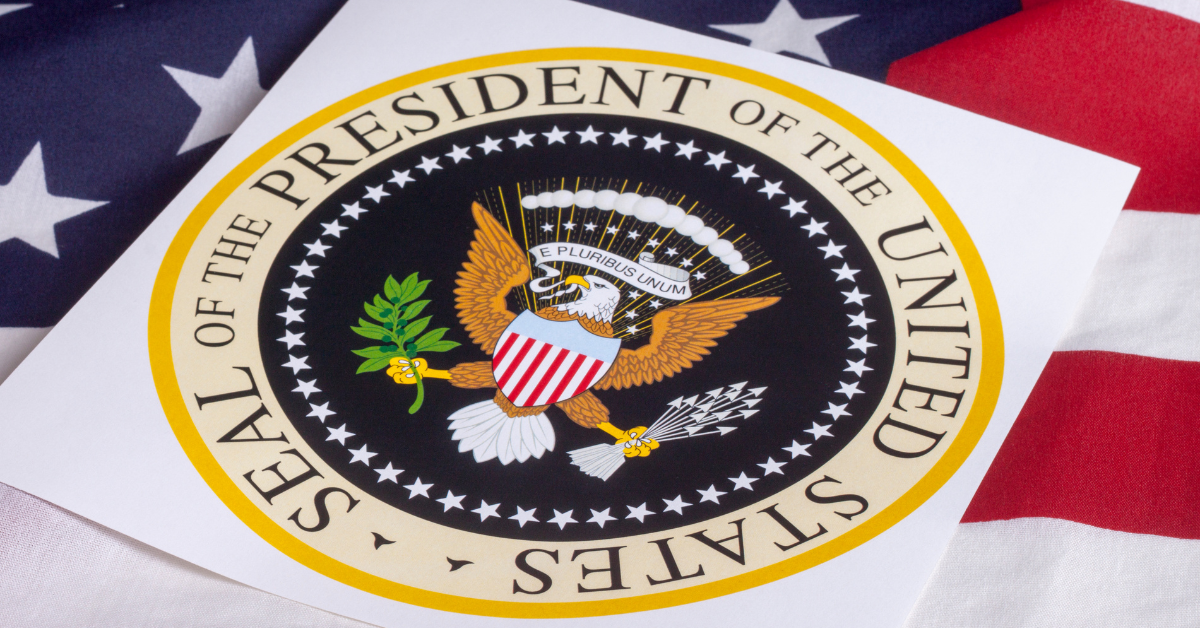
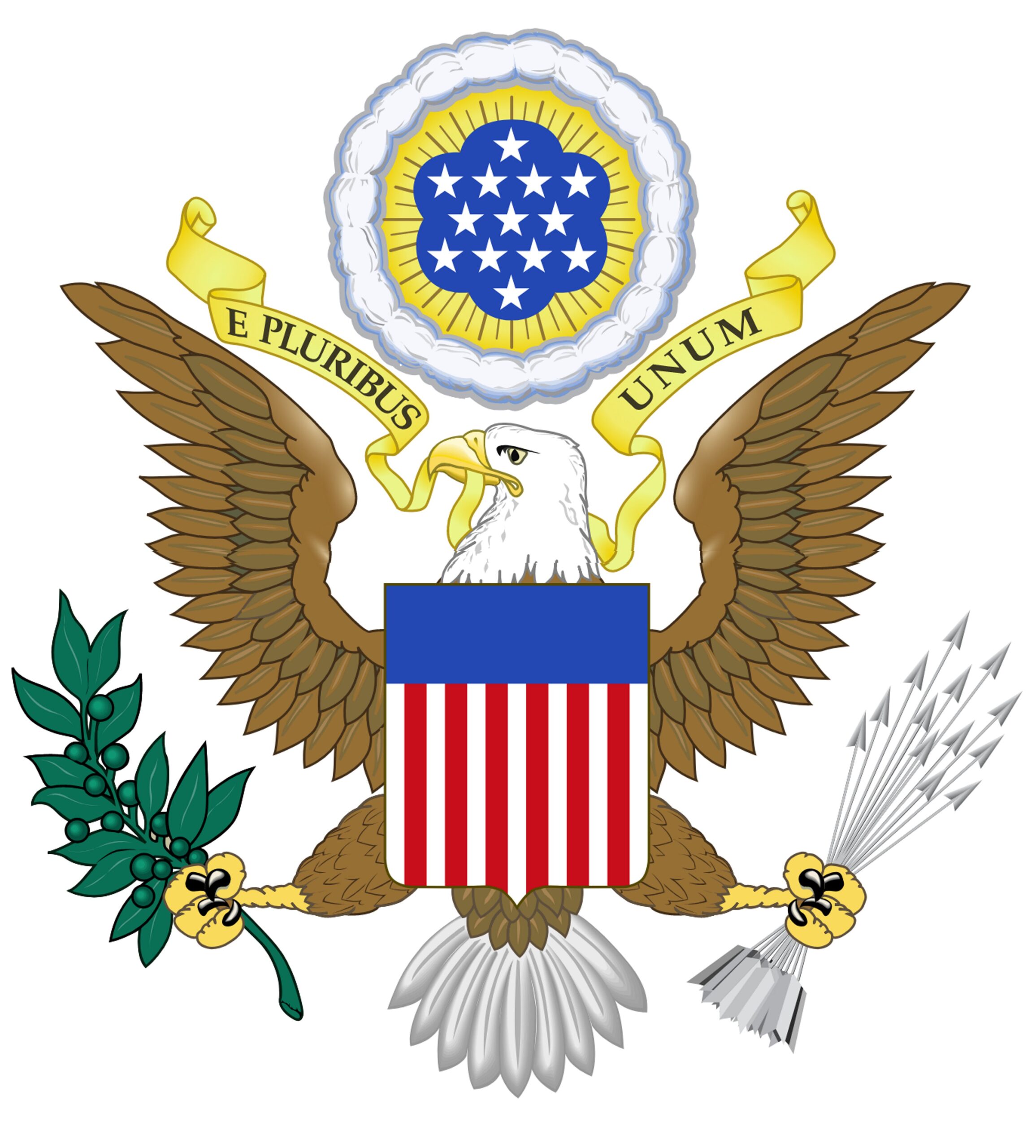
The arms of the United States of America very clearly derive from the national flag, which preceded them by five years. Both are brilliant pieces of design which are richly symbolic, and must rank in the very top few of the most iconic examples of their type in the world. The flag was approved by Congress in 1777, and the arms were chosen for the Great Seal in 1782.
There has evolved a fair degree of unanimity amongst North American historians that the national arms are not based on those of George Washington, that in no way did Washington interest himself or exert his authority in the design of the arms and flag, and that the visual connection with his personal arms, both having stars and stripes, was coincidental. Such a strongly held collective view cannot have developed without sound reasoning, and yet it overturned the opinions of nineteenth-century historians, who were dismissed as the victims of dewy-eyed romanticism, swayed by a national veneration for the first president of the United States.
The current author here challenges modern orthodoxy.
Quick Facts
At a glance
- The U.S. flag was approved in 1777, while the national arms (Great Seal) followed in 1782.
- The Betsy Ross story remains debated.
- The U.S. arms and flag are considered among the most iconic symbolic designs in the world.
Washington’s Presence in Early Designs
The various committees tasked with designing the national arms did include references to Washington. Some proposals incorporated elements of his command flag, and one even depicted him as a supporter.
There were also notable Masonic elements in early designs, significant given Washington’s well-known involvement in Freemasonry. It is reasonable to suggest that his personal preferences and influence may have shaped the thinking of those responsible for approving both the arms and the flag.

The Grand Union Flag
On 15 June 1775, George Washington was unanimously elected commander-in-chief by the Second Continental Congress. Shortly after, he took command of the army in Boston.
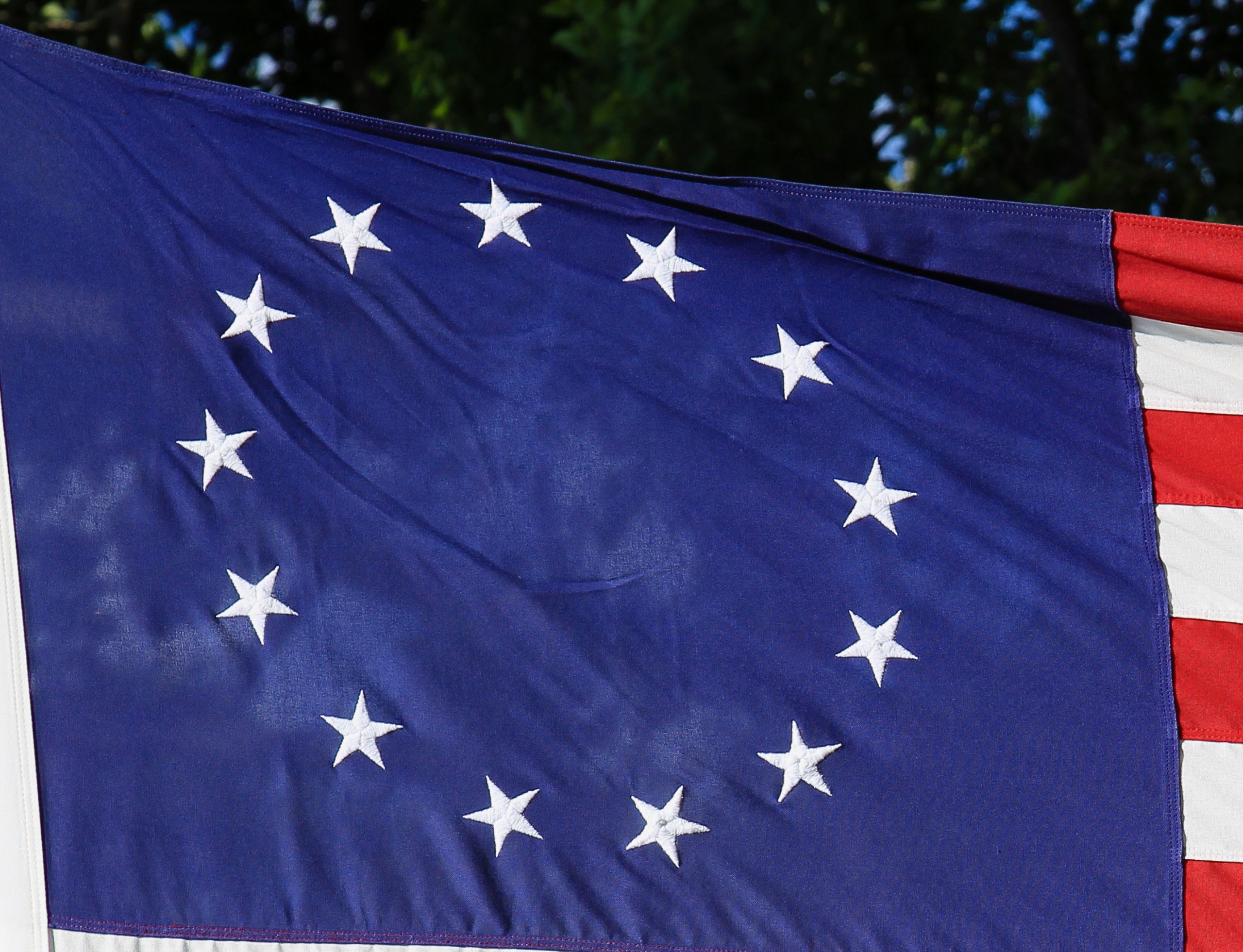
On 4 January 1776, he raised a new flag featuring thirteen alternating red and white stripes with a Union Jack in the canton. Washington referred to this as the “Union Flag,” in reference to the unity of the thirteen colonies. It later became known as the Grand Union Flag.
While the designer is unknown, Congress was not involved in this military decision. As commander-in-chief, Washington must have approved the design.
Heraldry and Personal Influence
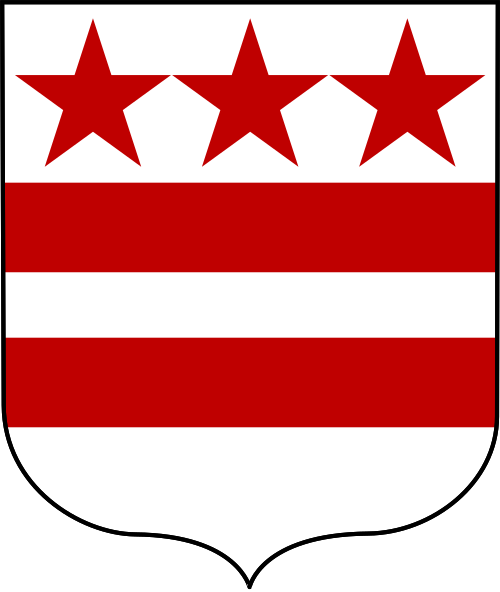
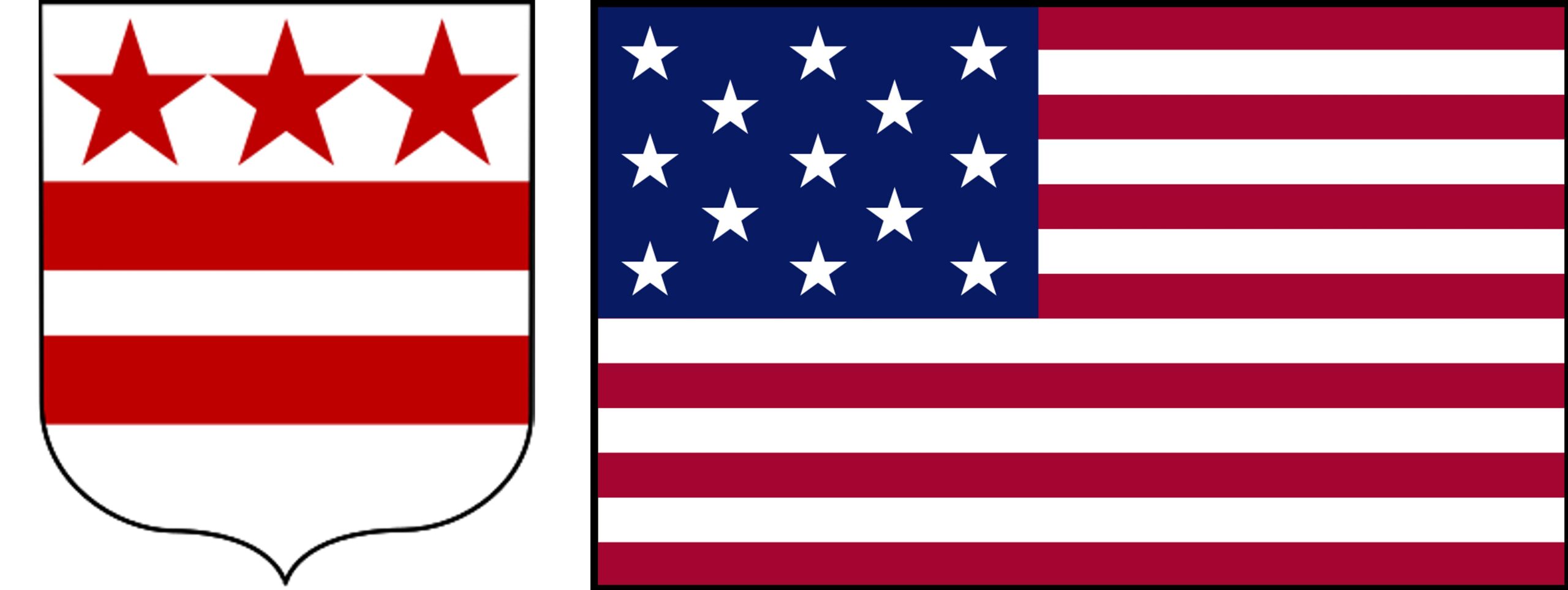
Long before the Revolution, Washington had a strong personal interest in heraldry. His coat of arms was widely displayed, and his household staff wore red and white livery derived from it.
This raises an important question: is it really a coincidence that the most striking feature of the American flag—the red and white stripes—matches the colors of Washington’s personal heraldry?
The Creation of the Great Seal
On 4 July 1776, the same day as the Declaration of Independence, Congress appointed John Adams, Thomas Jefferson, and Benjamin Franklin to oversee the design of a national coat of arms.
The process proved complex and prolonged, taking six years before a final design was approved in 1782.
Understand the symbols
Could a Coat of Arms Reveal More About Your Family?
Coats of arms are more than decorative designs. Their colors, symbols, structure, and inheritance can provide valuable evidence about people, families, and historical connections.
Learn how arms were granted, recorded, inherited, and interpreted through expert-led IHGS study.
Take Your Curiosity Further
Fascinated by the hidden stories behind American history? The connections between symbols, families, and the past are not just interesting—they’re traceable.
With the right training, you can learn how to uncover those same links in your own family history, using the records and methods professional genealogists rely on.
IHGS offers a structured pathway, giving you the skills and accreditation to go further—whether that means deepening a personal passion or turning your interest into a professional career in British Isles genealogy.
Browse Our CoursesFrancis Hopkinson and the Flag Design
In 1780, Francis Hopkinson submitted an invoice to Congress that included a claim for designing the American flag, which he referred to as the Naval Flag. This claim came several years after the flag’s introduction.
The Navy Board, on which Hopkinson served, worked closely with Washington. Following independence, Washington effectively became the central symbol of authority, and his approval would have been essential in such matters.
The Betsy Ross Story
The story of Betsy Ross, the Philadelphia seamstress said to have created the first Stars and Stripes, remains popular but problematic.
Ross claimed that she made the flag after a visit from Washington in June 1776. However, this account was not recorded until a century later and contains inconsistencies. Records show she was paid to produce naval flags in May 1777, shortly before Congress formally approved the design.
Washington’s known movements also cast doubt on the traditional timeline, though his approval would likely have been required before the final design was adopted.
Follow the evidence
History Leaves Clues. Learn How to Test Them.
Historical research often begins with a compelling story. Establishing what really happened requires comparing records, evaluating sources, understanding context, and recognizing where the evidence remains incomplete.
Learn the research habits that help turn family traditions and historical clues into a properly supported family history.
Build Stronger Research FoundationsThe Stars: Five or Six Points?
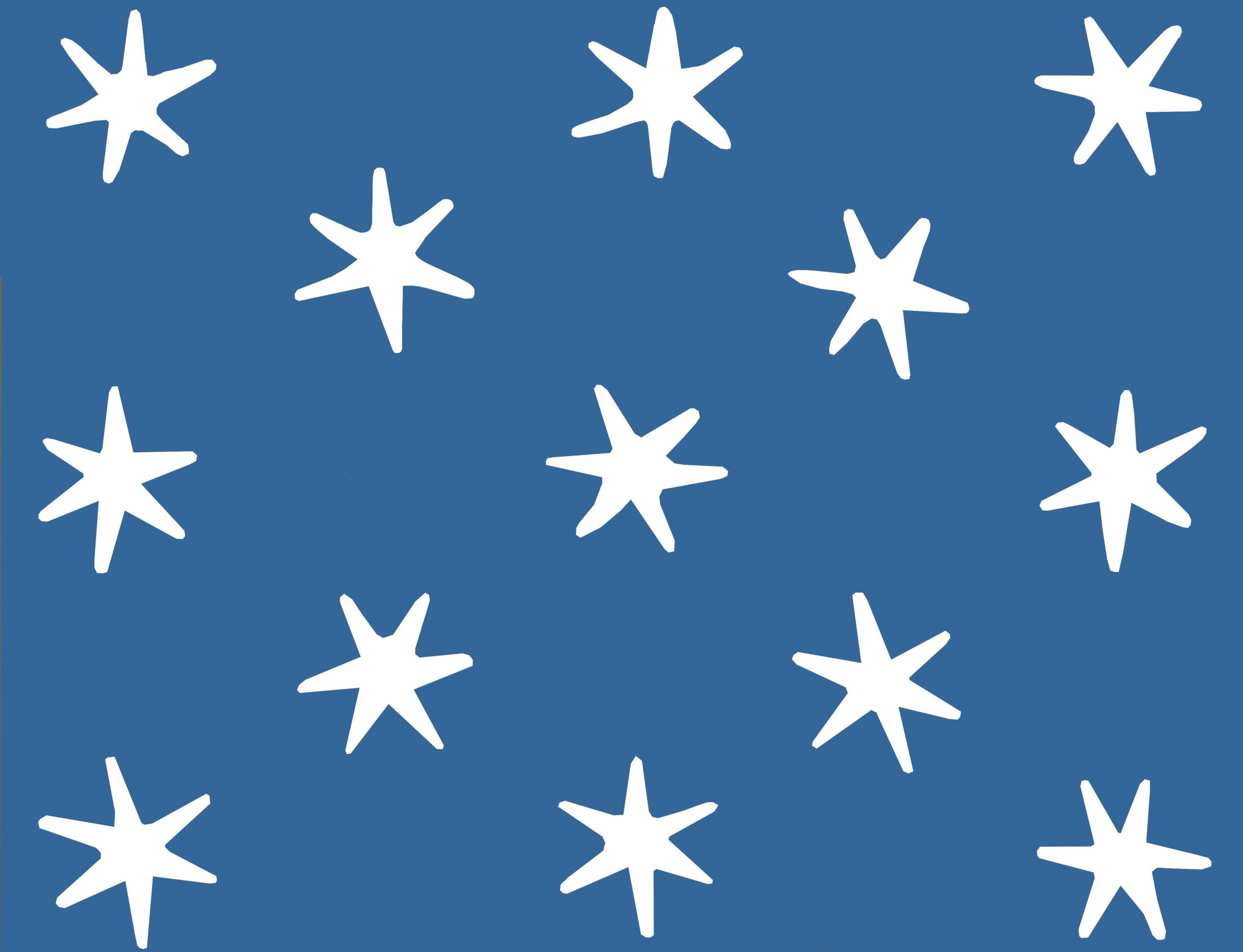
There has long been confusion over whether the original stars on the American flag had five or six points. Hopkinson is known to have preferred six-pointed stars in his designs.
Washington’s own Command Flag featured thirteen six-pointed stars on a blue field and predates the Stars and Stripes. Evidence of this appears in a painting of the Battle of Princeton.
It is possible that Hopkinson’s contribution was to place Washington’s command flag design into the canton of the earlier striped flag, replacing the Union Jack.
Freemasonry and Symbolism
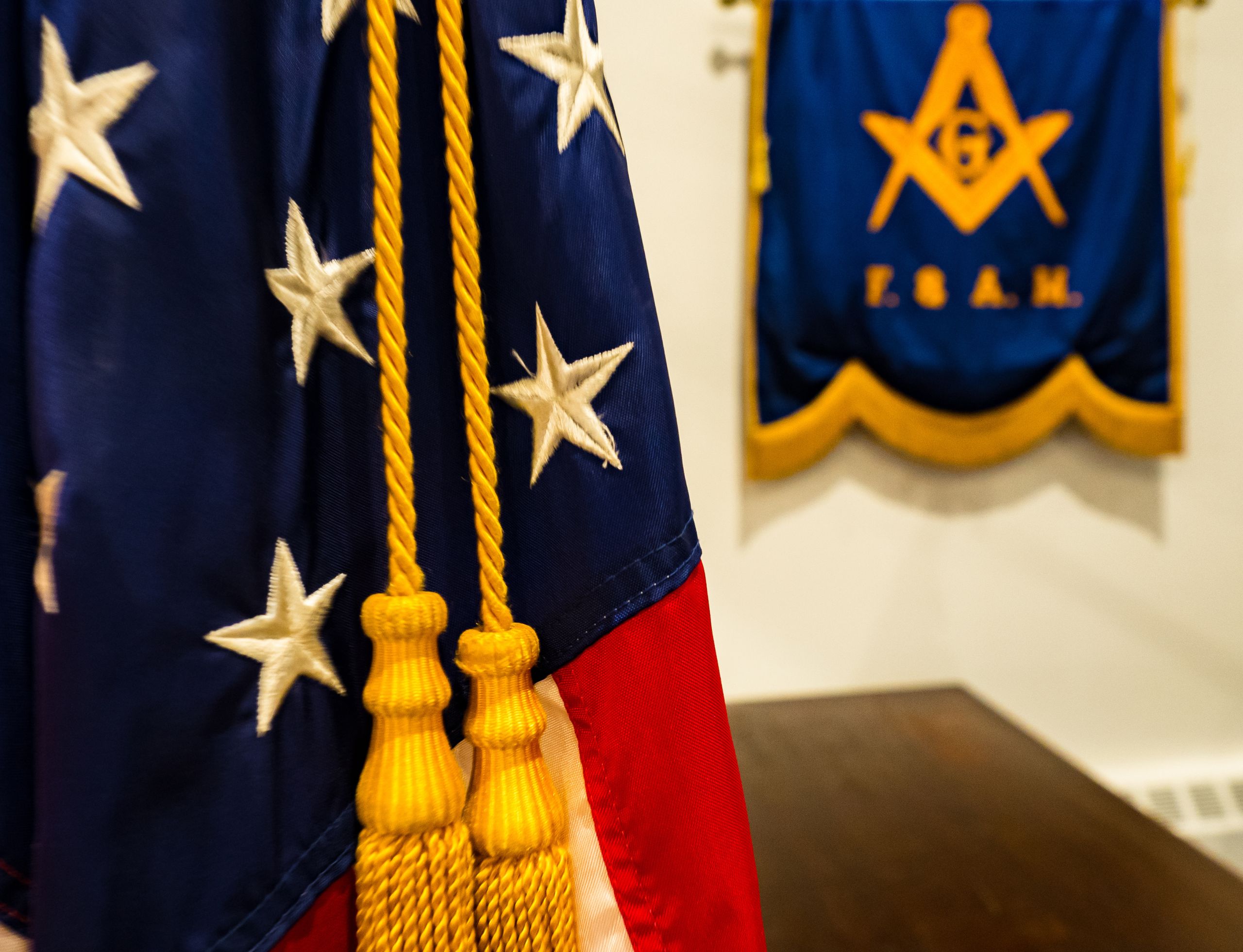
Washington was a prominent Freemason, as were many officers in his army. Philadelphia, a key center of the Revolution, was also a major center of American Freemasonry.
Stars were a common feature in Masonic symbolism, often depicted in lodge ceilings as points of light. These influences may have inspired both Washington’s command flag and the starry canton of the national flag.
According to later tradition, the shift from six-pointed to five-pointed stars may have been suggested by Betsy Ross. The five-pointed star held symbolic meaning in Masonic ritual, representing the “Pentacle of Solomon” and the five points of fellowship.
Conclusion: Coincidence or Influence?
The origins of the United States flag and arms remain complex and debated. While modern historians often dismiss any direct connection to George Washington’s personal heraldry, the evidence suggests his influence may have been more significant than commonly assumed.
Rather than coincidence, the similarities between his personal symbols and the national designs may reflect the impact of his leadership, preferences, and the cultural environment of the Revolutionary period.
George Washington Influence
Curious What Your Own History Might Reveal?
Stories like this don’t happen by accident. They are uncovered through careful research, deep knowledge of historical records, and an understanding of the traditions—like heraldry—that shaped them.
If exploring the hidden influences behind the American flag sparks your curiosity, imagine what you might discover in your own family story.
At the Institute of Heraldic and Genealogical Studies, you can learn how to trace those connections with confidence. From foundational courses like “Awaken Your Ancestors” to advanced study through the Higher Certificate in Genealogy, IHGS offers a clear, accredited pathway into British Isles research—one of the most valuable specialisms for American genealogists.
Whether you’re pursuing a personal passion or considering a new professional direction, this is where curiosity becomes real expertise.
Continue Your Education With IHGSChoose your next step
Where Will Your Interest in History Take You Next?
I Want to Understand Heraldry
Learn how coats of arms were designed, described, granted, inherited, and used as evidence in family-history research.
Explore Heraldry CoursesI Want to Research My Family Properly
Learn how to evaluate records, test family stories, and build every generation on stronger evidence.
Start With Tracing Your RootsI Want to Develop Advanced Expertise
Build professional-level genealogy skills through structured study, tutor guidance, and an established qualification pathway.
Explore the Higher CertificateNot sure which path is right for you?
© 2026 Institute of Heraldic and Genealogical Studies (IHGS). All rights reserved. This material is published for educational purposes and may not be reproduced without prior permission.