Bridging the Atlantic to find lost English, Scottish or Irish ancestors.
Supposing you have gone back as far as you can with your surname in America, but there is no record of when our where the original settler was born, or even when they were born. Supposing you do not even know whether your earliest known ancestor was the first immigrant; and what if they changed their surname?
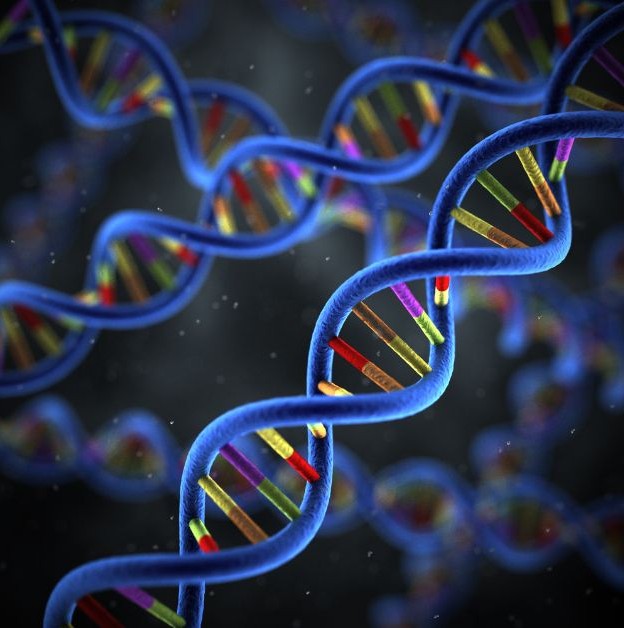
There is a good likelihood of being able to localise where your ancestor came from using Y-DNA testing, thereby adding a whole new chapter to your origins. The Y chromosome is that part of the genetic structure which determines maleness, and passes unchanged from father to son, excepting that small random copying errors can occur. Y-DNA can be used as a genetic clock. Not only can it be used to find where your ancestors lived in England, Scotland or Ireland, it can also take the history of your surname back thousands of years before the surname even existed.
Quick Facts
- Y-DNA acts like a genetic clock, reaching back thousands of years
- Y-DNA is not included in standard tests from AncestryDNA
IN DEPTH
Y-DNA
There is a good likelihood of being able to localise where your ancestor came from using Y-DNA testing, thereby adding a whole new chapter to your origins. The Y chromosome is that part of the genetic structure which determines maleness, and passes unchanged from father to son, excepting that small random copying errors can occur. Y-DNA can be used as a genetic clock. Not only can it be used to find where your ancestors lived in England, Scotland or Ireland, it can also take the history of your surname back thousands of years before the surname even existed.
This type of DNA is not tested by ancestry.com. Our recommended provider for Y-DNA testing is familytreedna.com, based in Texas. Scroll to Paternal Ancestry and select one of their three products: Y-37, Y-111 or Y-700. These cost between $100 and $400. We particularly recommend the Y-700 because it provides the best possible resource. Familytree.dna will provide you with some interesting information, but it is unlikely that they will get your ancestors to a specific geographical location in the British Isles or Ireland. Having obtained your result, IHGS will then be ready to assist you.
Because the Y-chromosome follows a surname, it can only be used to answer questions about the surname with which it is connected. If you are a woman you need to persuade your father, brother, cousin or uncle to take the test on your behalf.
DISCOVER
Curious where your story really begins?
IHGS undertakes genetic genealogical research, heraldic research, and also provides many online courses in topics relating to genealogy and heraldry. A high-level course on genetic genealogy, with a global focus, is currently under development.
TURN YOUR RESULT INTO A LOCATION
Have Y-DNA Results but Still No Ancestral Location?
A Y-DNA test may reveal matches and haplogroup information without identifying the particular place in England, Scotland, Ireland, or Wales where your paternal line began.
IHGS specialists can help interpret your results alongside surnames, family trees, historical records, and geographical evidence.
FOLLOW THE RECORDS
DNA May Reveal the Clue. Records Build the Story.
Genetic evidence can point toward an ancestral connection, but documentary research is needed to identify people, places, relationships, and the generations that connect them.
Learn how to evaluate evidence and build your family history one properly supported connection at a time.
Build Stronger Research FoundationsCHOOSE YOUR NEXT STEP
What Is Your Next Step Across the Atlantic?
I Already Have Y-DNA Results
Get specialist help using your results to investigate the geographical origins of a paternal family line in England, Scotland, Ireland, or Wales.
Explore Y-DNA Location InsightI’m Not Sure Which DNA Test I Need
Get guidance on testing options, existing results, and the questions different DNA tests may help answer.
Explore DNA Advisory ServicesI Want to Research My Family Properly
Learn how to organize clues, evaluate records, and build every generation on stronger evidence.
Start With Tracing Your RootsI Want to Develop Advanced Expertise
Build professional-level research skills through structured study, tutor guidance, and an established genealogy qualification pathway.
Explore the Higher Certificate