IHGS HERALDRY & FAMILY HISTORY
THE IDENTIFICATION OF AMERICAN COATS OF ARMS
AT A GLANCE
A coat of arms is evidence—not an automatic family connection.
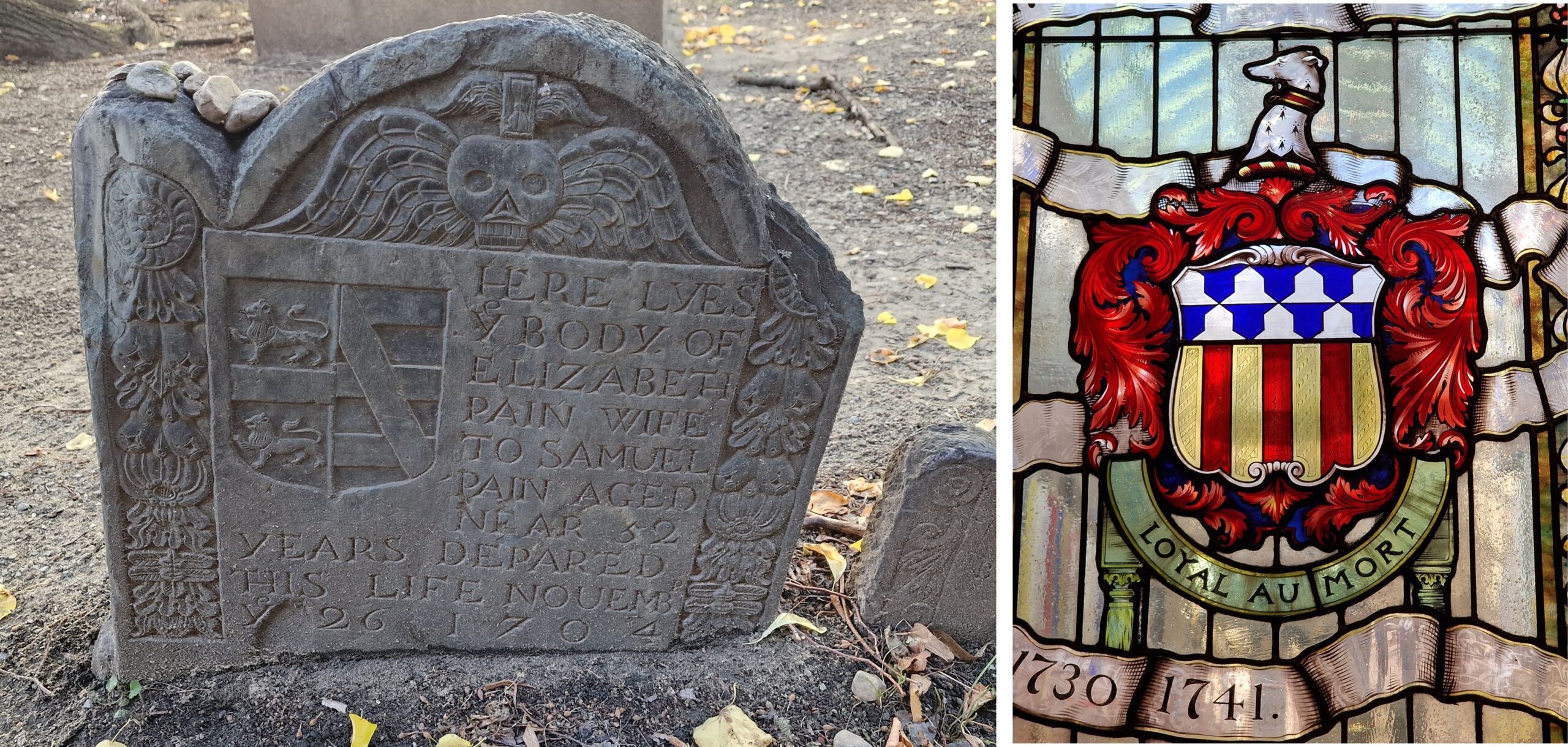
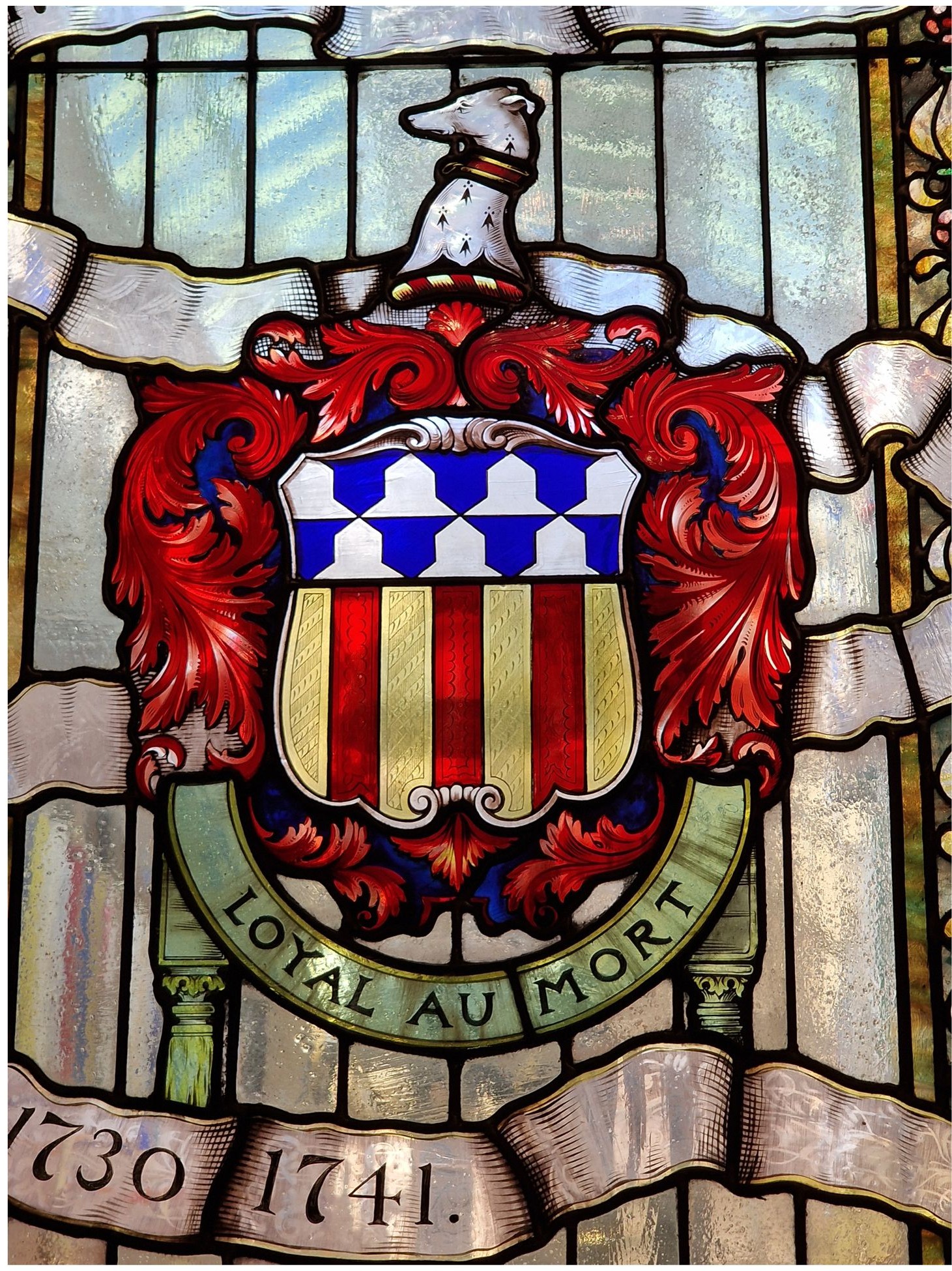
- Sharing a surname and coat of arms does not prove direct ancestry. The right to use arms belongs to the person or family to whom they were granted or legitimately transmitted.
- Coats of arms in America can originate from any European country, making identification complex. Style, history, migration and documentary records all help establish where a design came from.
THE CHALLENGE OF IDENTIFICATION
Identification
In the later nineteenth century, the New England Historic Genealogical Society began to register arms that could be verified as having been legitimately borne in Europe by ancestors of American families. The rolls that followed contain hundreds of examples, rather than the thousands sometimes imagined.
A responsible identification asks several questions: what does the design look like, where was it found, when was it made, and what family or community owned it? The answer is built from heraldic comparison and genealogy together.
English & Scottish Arms
England, encompassing Wales and Ireland for many historical purposes, and Scotland have useful resources and active heraldic authorities. Official registers become particularly important from the late seventeenth century, while heraldic visitations in the sixteenth and seventeenth centuries can provide earlier evidence. The record becomes more patchy before the sixteenth century. The Dictionary of British Arms and the Medieval Ordinary are also valuable reference works.
These sources can help identify a design, but identification still needs to be followed by genealogical research. A coat of arms associated with a surname is a starting point for a family-history investigation, not its conclusion.
The Rise of Self-Adopted Arms
From the eighteenth century, self-adopted arms became increasingly common in England. Members of the gentry and others could adopt arms for themselves, and some adopted the arms of a family with the same surname. This practice also travelled to the colonies.
Self-adoption does not make a design impossible to identify, but it means that no automatic descent can be assumed. The history of the object and the family must be investigated separately from the visual design.
A Notable Historical Gap
Many seventeenth-century immigrants arrived during a period when records can be difficult to interpret. In England, the Civil War and Commonwealth period from 1642 to 1660 also creates a notable gap and can complicate the relationship between a family, its social status and its heraldic evidence.
Dutch Arms and Early American Settlers
Dutch arms present a different challenge. Outside the nobility there was no single system of regulation comparable to the English model, and mercantile families sometimes adopted arms for themselves. Records are incomplete, so an investigation may need to combine Dutch resources with American land, church, legal and family records.
Country by country, the style of the arms can offer a clue. The most persuasive identification then comes from testing that clue against the chronology, migration history and documented relationships of the family.
CURIOUS ABOUT YOUR FAMILY HISTORY?
Read the design. Then follow the family.
IHGS has an extensive heraldry library and can help identify an unknown coat of arms. Where required, our heraldic research can be paired with genealogical research to establish whether a documented family connection exists.
IDENTIFY THE ARMS
Have you found a coat of arms you cannot identify?
Get expert help assessing the design, its likely origin and the family-history evidence needed to investigate it responsibly.
LEARN THE LANGUAGE OF HERALDRY
Could you learn to read the evidence yourself?
Learn the same methods experts use to assess heraldic evidence, strengthen your family-history research and develop specialist knowledge for a career in genealogy.
CHOOSE YOUR NEXT STEP
Where could your research lead next?
01
Identify an Unknown Coat of Arms
Begin with a careful professional assessment.
Explore Research Services02
Learn Heraldry
Understand the language, structure and history of heraldic evidence.
View Heraldry Courses03
Prove the Family Connection
Build the documentary chain between an ancestor and the arms.
Start Tracing Your Roots04
Develop Advanced Expertise
Build professional-level research skills through structured study and tutor guidance.
Explore the Higher CertificateNot sure where to begin?